Uma Patterson · 27 September 2026
Local Groups Breathe New Life into England's Overlooked Oak Hedgerows
England's hedgerows have long served as living boundaries that divide fields while supporting wildlife corridors across the countryside, yet many of these structures containing mature oak trees have faded from public attention in recent decades. Local community organizations now lead restoration projects that focus on oak components within these hedgerows, drawing on historical records and ecological surveys to identify neglected sites for targeted intervention. These efforts combine volunteer labor with partnerships involving landowners and regional authorities, resulting in new plantings and management practices that revive oak presence without large-scale commercial involvement.
Historical Context of Oak in English Hedgerows
Oak trees formed key elements in hedgerow systems that developed over centuries as farmers planted or allowed trees to grow along field edges for timber, shade, and boundary markers, and data from the UK National Hedgerow Survey shows oak remains among the most common hedgerow species in southern and central counties. Researchers at the University of Exeter have documented how 18th and 19th century enclosure acts accelerated hedgerow creation, embedding oak saplings that matured into veteran trees providing habitat for insects, birds, and mammals. Over time many hedgerows lost their oak components through removal for agricultural efficiency or neglect during periods of mechanized farming expansion, leaving fragmented lines dominated by faster-growing shrubs.
Yet records indicate that surviving oak hedgerows still cover thousands of kilometers in regions like the West Midlands and parts of East Anglia, where they function as carbon stores and connectivity features between woodland patches. Studies conducted by Natural England reveal that hedgerows with oak presence support higher biodiversity levels compared to those without, including pollinator populations and small mammal routes that contribute to broader ecosystem stability.
Current Initiatives by Community Organizations
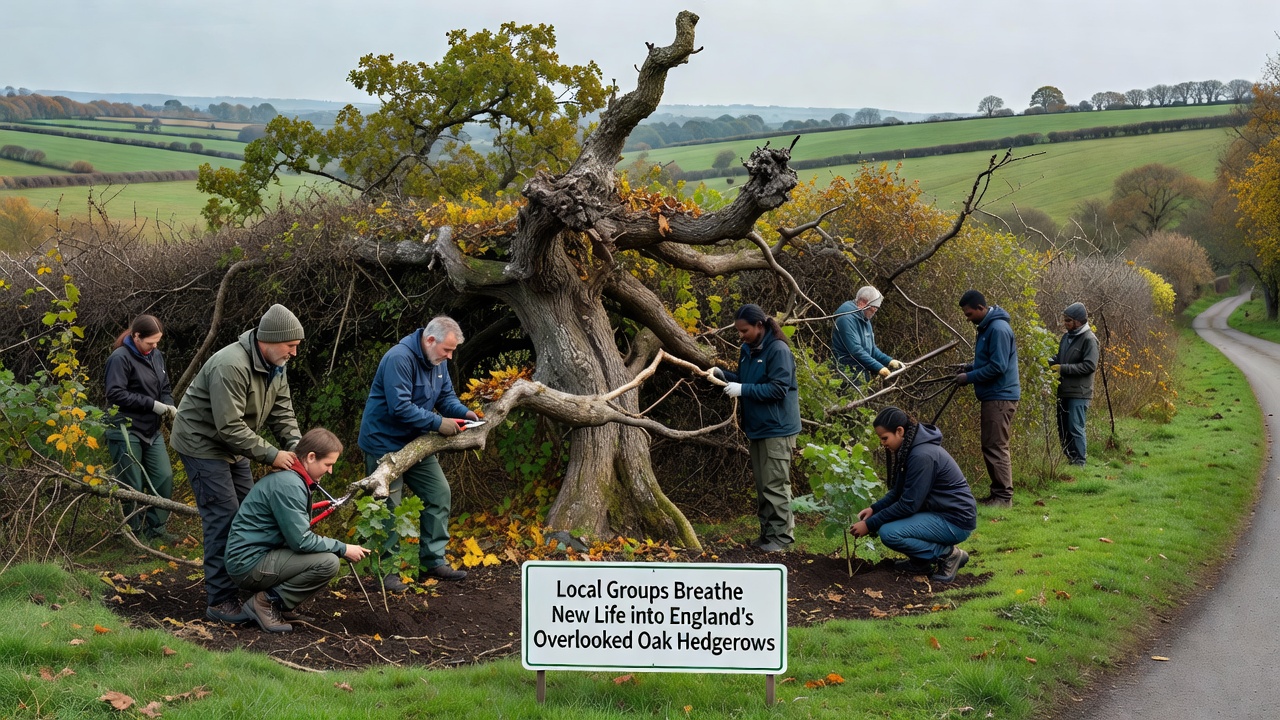
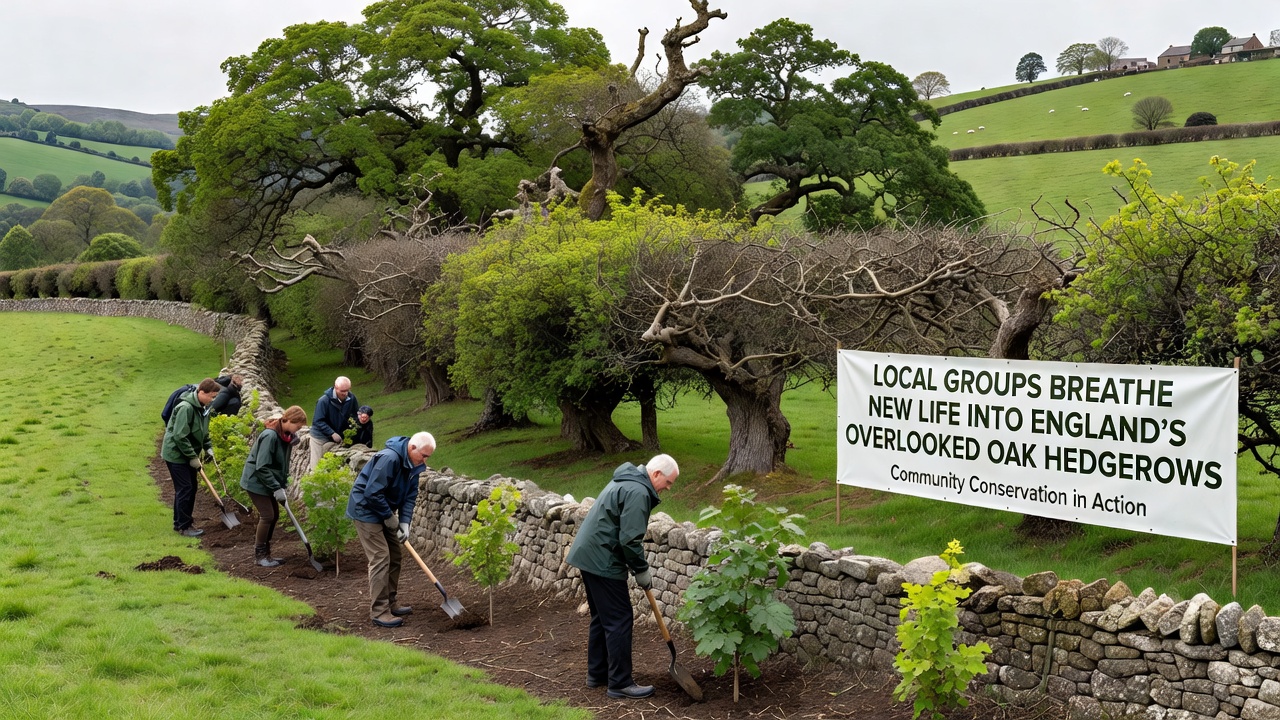
Community groups across England have launched mapping exercises that combine citizen science apps with professional arborist assessments to locate overlooked oak hedgerows, and these projects often begin with public workshops that teach identification techniques for aging oak trees based on bark texture and branch structure. One initiative in Gloucestershire coordinated by a local wildlife trust planted over 1,200 oak saplings into existing hedgerow gaps during 2024 and 2025, using native provenance stock selected for resilience to local soil conditions. Similar programs operate in Devon and Norfolk, where volunteers clear invasive species around oak bases while installing protective guards against browsing deer and livestock.
These groups coordinate with county councils to secure permissions for work on public rights of way and private farmland, and they track progress through annual monitoring that records survival rates and growth metrics. Figures from the Hedgerow Heroes network, a coalition of regional projects, show that collective efforts have restored oak elements along 85 kilometers of hedgerow since 2022, with data uploaded to open-access databases for researchers and planners.
Ecological and Practical Benefits
Oak hedgerows deliver measurable services including soil stabilization along slopes, reduced wind erosion in open fields, and seasonal acorn production that supports wildlife food chains, according to findings published by the Woodland Trust. Local groups emphasize coppicing techniques on older oaks to encourage new growth while preserving deadwood habitats for invertebrates, and they integrate these methods with traditional laying practices that maintain dense shrub layers beneath the trees. Evidence collected during field surveys demonstrates improved connectivity for species such as dormice and bats when oak gaps are filled, creating continuous corridors that link isolated woodland fragments.
Practical advantages extend to flood mitigation, since well-managed hedgerows slow water runoff during heavy rainfall events, and carbon sequestration estimates from Forestry Commission reports assign higher values to mixed hedgerows containing oaks than to purely shrubby boundaries. Community projects incorporate these metrics into funding applications, securing grants that cover sapling costs and equipment without relying on timber harvesting revenue.
Challenges and Monitoring Approaches
Restoration teams face obstacles such as inconsistent landowner participation and variable success rates due to weather extremes, yet they address these through flexible agreements that allow phased work and shared monitoring responsibilities. In September 2026 the national hedgerow monitoring program plans to release updated spatial data layers that will help groups prioritize oak restoration zones based on connectivity gaps and soil suitability models. Groups respond to disease risks by selecting diverse oak provenances and avoiding monoculture plantings, while they document any signs of stress through photographic records submitted to centralized databases.
Training sessions cover legal aspects including protections under the Hedgerows Regulations 1997, ensuring volunteers understand notification requirements before cutting or planting. Partnerships with agricultural colleges provide technical support on soil testing and aftercare protocols that improve establishment rates for new oaks.
Conclusion
Local organizations continue to expand their reach by sharing techniques through online forums and regional gatherings, building a distributed network that adapts methods to different landscapes and ownership patterns. These activities contribute to national biodiversity targets by increasing the structural complexity of hedgerows and reintroducing oak as a dominant feature in areas where it had declined. Ongoing data collection supports evaluation of long-term outcomes, allowing adjustments to planting densities and species mixes based on observed performance across multiple sites.