Leon Weber · 13 September 2026
Heritage Designations Safeguard Historic Oaks While National Monitoring for Leaf Pathogens Broadens
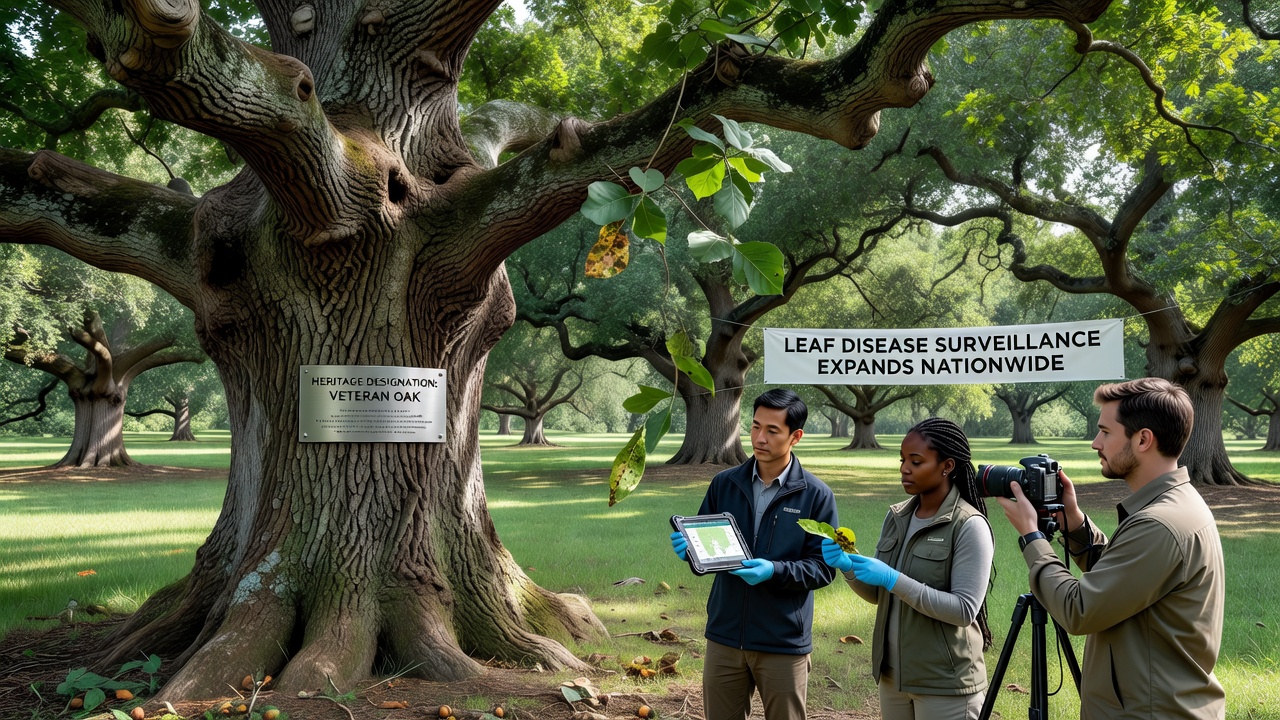
Heritage designations have become a key mechanism for shielding veteran oaks from development pressures and environmental stressors, and these protections now intersect with expanding leaf disease surveillance programs that cover multiple regions across the country. Government agencies track foliar pathogens through systematic sampling, while designated sites receive additional layers of oversight that limit interventions capable of spreading infections. Data from monitoring networks show increased detection rates in areas where oak populations have stood for centuries, and authorities coordinate responses that combine site-specific restrictions with broader surveillance grids.
Expansion of Surveillance Networks
Surveillance efforts scaled up significantly in September 2026 when federal and regional partners added new sampling locations and laboratory capacity. The program now incorporates aerial imagery, ground-based inspections, and citizen-submitted reports to identify early signs of leaf discoloration, necrosis, and premature defoliation. Figures from the expanded network indicate that coverage increased by roughly 35 percent compared with the previous year, allowing officials to map pathogen distribution across both protected and unprotected landscapes. Researchers note that veteran oaks often host unique microbial communities, which makes these trees valuable reference points for understanding how diseases move through established canopies.
Role of Heritage Status in Tree Health Management
Heritage designations impose legal requirements that restrict pruning, soil disturbance, and chemical applications near protected trees. These rules reduce pathways for pathogen transmission, since many leaf diseases spread through wounds or contaminated equipment. Local authorities maintain registers of veteran oaks that carry heritage status, and any proposed works must undergo review by conservation officers who consult with plant health specialists. Evidence from designated sites demonstrates lower incidence of certain foliar issues when access and management activities remain tightly controlled.
One study conducted by a university forestry department examined paired sites, some with heritage protections and others without. Results revealed that protected veteran oaks experienced slower disease progression in several monitored plots, although researchers emphasized that site history, soil conditions, and surrounding vegetation also influence outcomes. Observers note that heritage rules create a buffer that aligns with integrated pest management principles used by forestry agencies in other countries.
Coordination Across Regions and Agencies
National surveillance relies on partnerships between forestry commissions, agricultural departments, and heritage bodies. In one documented case, officials in a northern county shared early detection data with counterparts in southern regions, enabling targeted surveys before symptoms appeared in new locations. Similar information exchanges occur with international partners, including agencies in Canada and Australia that maintain comparable oak health programs. These collaborations supply reference datasets on pathogen genetics and climate-related spread patterns.
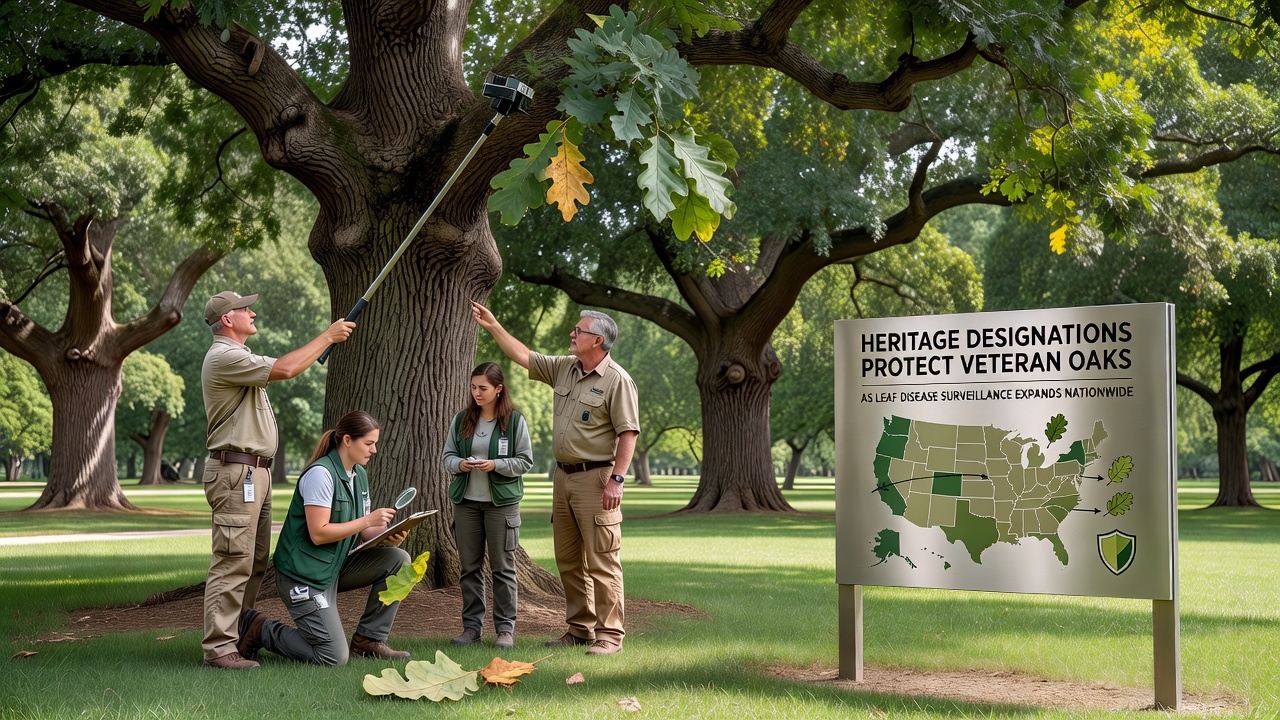
Training sessions for arborists and land managers now include modules on recognizing leaf disease symptoms while respecting heritage constraints. Participants learn to report findings through standardized digital platforms that feed directly into national databases. The approach minimizes duplication and speeds verification by diagnostic labs. According to reports from the USDA Forest Service, comparable training models have improved early detection timelines in North American oak populations.
Challenges in Implementation
Resource limitations and varying local expertise create uneven coverage in some districts. Private landowners who manage heritage-designated oaks sometimes face delays when seeking permissions for necessary maintenance, which can allow minor issues to worsen. Surveillance teams address these gaps by prioritizing high-risk zones identified through predictive modeling that factors in tree age, previous disease records, and visitor traffic. Data shared by the UK Forest Research agency shows that predictive tools have helped allocate limited field crews more effectively during peak monitoring seasons.
Public engagement campaigns encourage reporting of unusual leaf symptoms, yet response rates vary by region. Educational materials distributed through heritage organizations explain how to submit observations without entering restricted zones. These efforts complement professional surveys and contribute to the overall dataset used for national risk assessments.
Conclusion
Heritage designations continue to function as practical tools that limit activities known to facilitate leaf disease transmission around veteran oaks. At the same time, the nationwide surveillance expansion initiated in September 2026 supplies the data needed to detect and respond to emerging threats across both protected and non-protected areas. Ongoing coordination among agencies, landowners, and researchers supports consistent monitoring and evidence-based adjustments to management protocols. The combined approach integrates legal protections with scientific observation, providing a framework that other nations have begun to adapt for their own ancient tree populations.