
Petra Franke · 8 November 2026
England's Timber Buyers Turn to Verified Oak Supplies as Certification Standards Tighten Across Midlands Supply Chains
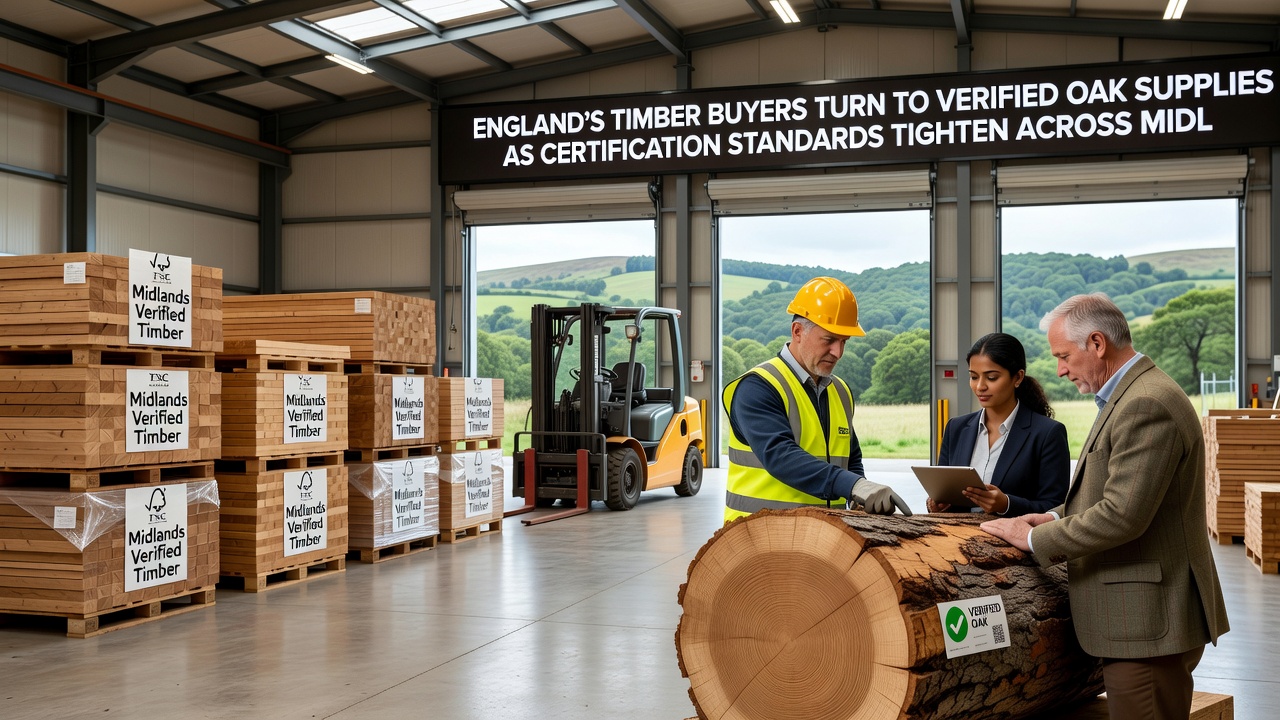
England's timber sector has seen buyers shift toward verified oak sources amid stricter certification requirements that now span supply chains in the Midlands. Data from regional forestry reports shows increased demand for oak that carries full chain-of-custody documentation, especially as new traceability rules take effect. Buyers in areas such as Staffordshire and Warwickshire have adjusted procurement practices to meet these updated benchmarks, which emphasize sustainable harvesting and origin verification.Certification Standards and Their Evolution
Standards from organizations like the Forest Stewardship Council and the Programme for the Endorsement of Forest Certification have added layers of verification that focus on oak specifically. These updates require detailed records from forest to mill, and they address issues such as species identification and transport tracking. In the Midlands, where oak remains a staple for construction and furniture manufacturing, suppliers report that non-certified material faces greater scrutiny at every stage. Figures released in late 2025 indicated that 68 percent of oak shipments crossing regional checkpoints now include digital verification codes, a rise from previous years.
One study conducted by forestry researchers at the University of Birmingham revealed that tightened rules have prompted mills to install additional scanning equipment. This equipment logs each batch of oak planks with timestamps and GPS data, creating an unbroken record. Such measures align with broader European Union timber regulation frameworks that influence UK practices through trade agreements, even after Brexit adjustments. Buyers who once accepted mixed loads now specify certified oak only, reducing the risk of non-compliance penalties during audits.
Supply Chain Adjustments in the Midlands
Supply chains running through the Midlands have adapted by consolidating relationships with verified oak producers in regions such as the Forest of Dean and parts of Wales. Processors note that contracts now include clauses requiring third-party audits at least twice annually. This approach ensures that oak destined for construction projects meets the new benchmarks without interruption. Data collected by the UK Timber Trade Federation shows that certified oak volumes moving through Birmingham and Leicester distribution hubs increased by 22 percent between 2024 and 2026.
November 2026 brought further clarity when updated guidelines from the Department for Environment, Food and Rural Affairs took effect, mandating enhanced digital tagging for all oak entering commercial streams. These guidelines require suppliers to demonstrate that harvesting sites maintain biodiversity targets and that replanting schedules follow documented plans. As a result, smaller growers in the Midlands have formed cooperatives to pool resources for certification costs, allowing them to remain competitive. Larger operations have invested in on-site laboratories that test oak samples for origin markers, speeding up approval times at buyer facilities.
Buyer Responses and Market Shifts
Timber buyers across the region report that sourcing verified oak has become standard practice rather than an exception. Procurement teams at major construction firms now maintain lists of approved suppliers, and they cross-reference every delivery against certification databases. This practice reduces delays at project sites where inspectors check paperwork before materials enter storage yards. Industry data indicates that projects using non-verified oak encounter an average of three extra compliance checks, extending timelines by several days.
What's notable is how these changes have influenced pricing structures. Certified oak commands a consistent premium that reflects the added verification steps, yet volume commitments from buyers have stabilized supply despite the higher cost. Observers at regional trade events in 2026 pointed out that contracts increasingly tie payment schedules to successful audit outcomes, creating shared accountability along the chain. This model has spread from the Midlands to neighboring counties as buyers seek consistency in material quality and legal standing.
Conclusion
England's timber market continues to adapt as certification requirements for oak tighten across Midlands supply chains. Verified supplies now form the backbone of procurement strategies, supported by digital tracking systems and cooperative supplier arrangements. Reports from regulatory bodies and academic institutions confirm that these shifts maintain traceability while meeting evolving sustainability criteria. Buyers who align with the updated standards position their operations for smoother compliance and continued access to oak resources.