Leon Weber · 25 October 2026
Drought Data Informs Oak Seedling Selection Among Midlands Growers Expanding Hedgerow Connections
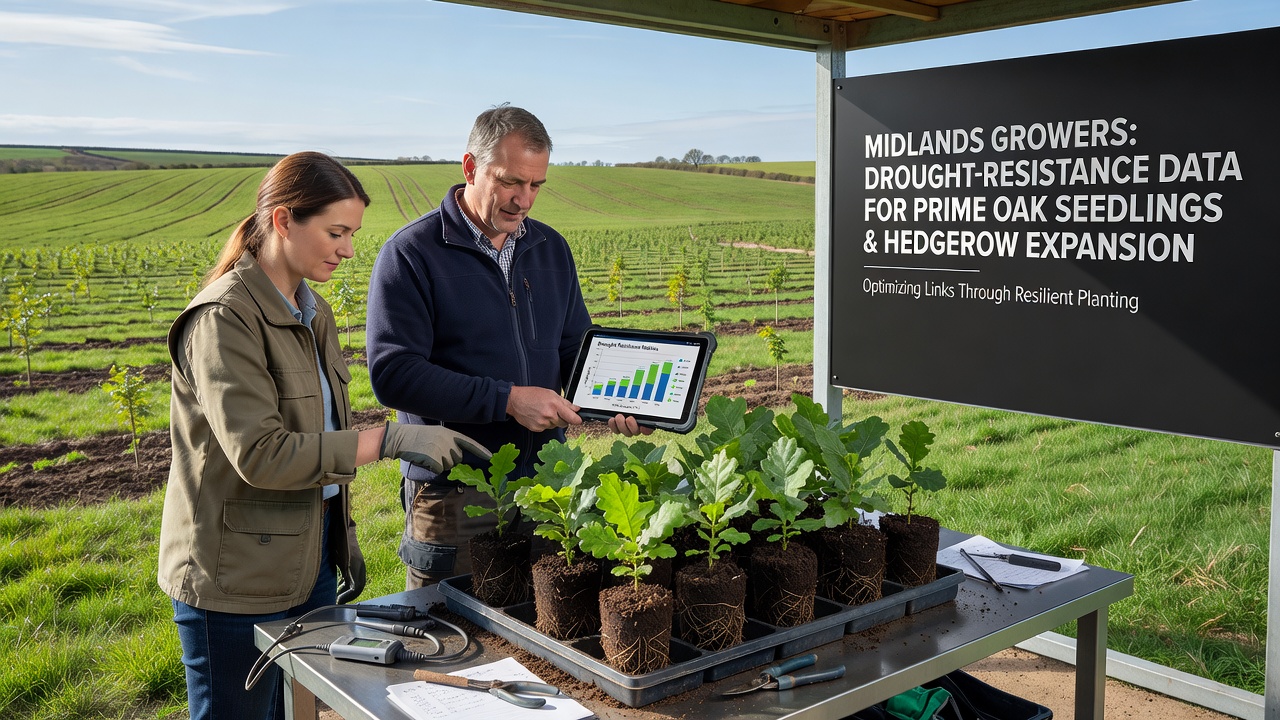
Growers across the Midlands have turned to drought resistance datasets when choosing oak seedlings for hedgerow restoration projects that aim to reconnect fragmented woodland corridors, and this approach draws on field measurements collected over multiple growing seasons. Data from soil moisture probes combined with genetic markers helps identify which seedlings show stronger tolerance to extended dry periods, while nursery records track survival rates under controlled stress tests that simulate future climate conditions.
Data Collection Methods in Regional Nurseries
Teams at several Midlands nurseries gather weekly readings on leaf water potential and root biomass from batches of Quercus robur and Quercus petraea seedlings, then cross-reference these figures against regional weather station outputs that cover the past decade. Researchers at these sites note that seedlings displaying slower stomatal closure during simulated drought events often establish more reliably once planted along field margins, and growers incorporate this information into selection protocols that prioritise stock from parent trees sourced in drier eastern counties. The process also includes assessments of mycorrhizal associations, since certain fungal partners improve water uptake in low-moisture soils according to studies conducted by the Forestry Commission.
Seedling batches undergo grading based on a composite score that weighs drought performance against growth vigour and disease resistance traits, and this scoring system allows nurseries to allocate prime stock toward hedgerow schemes that target gaps between existing woodland patches. Local authorities have supported these efforts by mapping priority corridors where habitat connectivity can support pollinator movement and small mammal dispersal, while data shared through regional grower networks helps refine future planting lists.
Integration with Hedgerow Expansion Projects
Project coordinators in Staffordshire and Leicestershire counties have used the refined seedling lists to plant over 12,000 oaks along 45 kilometres of new and restored hedgerows during the 2025-2026 planting windows, and monitoring teams report that survival rates exceed 85 percent in areas where drought-selected stock was deployed. These figures come from post-planting surveys that record canopy development and soil moisture retention at paired sites, one using standard nursery stock and the other using the data-selected seedlings. Observers note that hedgerow links created with the selected oaks show faster canopy closure, which in turn reduces soil evaporation rates during summer months.
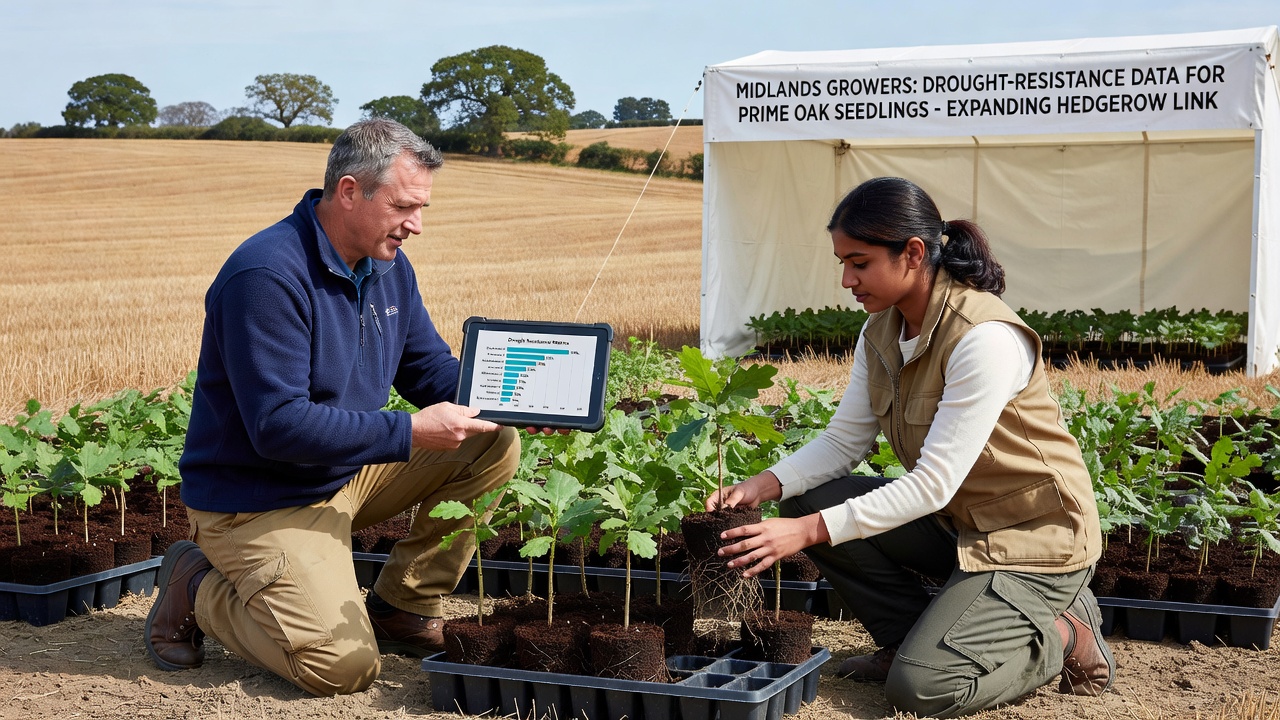
Planting schedules have aligned with funding rounds that opened in spring 2026, allowing growers to scale operations ahead of the autumn planting season. In October 2026 several Midlands estates completed additional sections of hedgerow that join previously isolated oak stands, creating continuous corridors that extend several kilometres. The work follows guidance from the UK government’s environmental land management schemes, which reward farmers for actions that improve habitat connectivity and climate resilience.
Supporting Research and Regional Comparisons
Long-term trials run by university forestry departments have supplied baseline drought tolerance rankings that Midlands nurseries now apply at commercial scale, and these rankings incorporate both phenotypic observations and genomic screening results. Growers in adjacent regions have begun adopting similar protocols, although soil type variations require local calibration of the selection thresholds. Data from comparable projects in parts of North America, including work coordinated by the US Forest Service, shows parallel patterns where drought-screened oak stock outperforms unselected material on marginal sites during dry years.
Equipment suppliers have introduced portable sensors that measure chlorophyll fluorescence in the field, giving growers immediate feedback on seedling stress responses before final planting decisions. These tools complement laboratory analyses and reduce reliance on visual inspection alone, while training sessions organised through grower cooperatives ensure consistent application of the new protocols across different operations.
Conclusion
The combination of drought resistance data and targeted seedling selection has become a standard component of Midlands hedgerow initiatives, and the resulting plantings contribute measurable improvements in corridor connectivity. Continued refinement of selection criteria based on ongoing monitoring will shape future planting seasons, while shared datasets allow growers to adjust strategies as climate patterns evolve.