Zara Weber · 11 October 2026
Bark Beetle Pressures Spur Fresh Monitoring Tactics in England's Southern Oak Sites
England's southern oak woodlands face ongoing pressures from bark beetle populations that have prompted forestry teams to adopt updated monitoring approaches across multiple counties. Data collected through the past decade shows these insects targeting weakened trees in sites from Hampshire through to Sussex and into parts of Dorset, where warmer summers and changing rainfall patterns create conditions that favor beetle activity. Researchers tracking infestation rates note that the European oak bark beetle along with related species now appears in higher densities than records from earlier periods indicated.
Current Beetle Activity Across Southern Regions
Surveys conducted by regional forestry officers reveal clusters of attacked oaks in areas previously considered low risk, with entry holes and frass deposits appearing on trunks during routine checks. In October 2026 field teams reported fresh signs of activity in several ancient woodland fragments where previous assessments had shown stable conditions. These findings align with broader European data that links beetle outbreaks to stressed host trees following drought events and storm damage. Observers note that southern England shares similar soil and climate profiles with regions in northern France where comparable increases have already triggered coordinated responses.
Updated Monitoring Methods in Practice
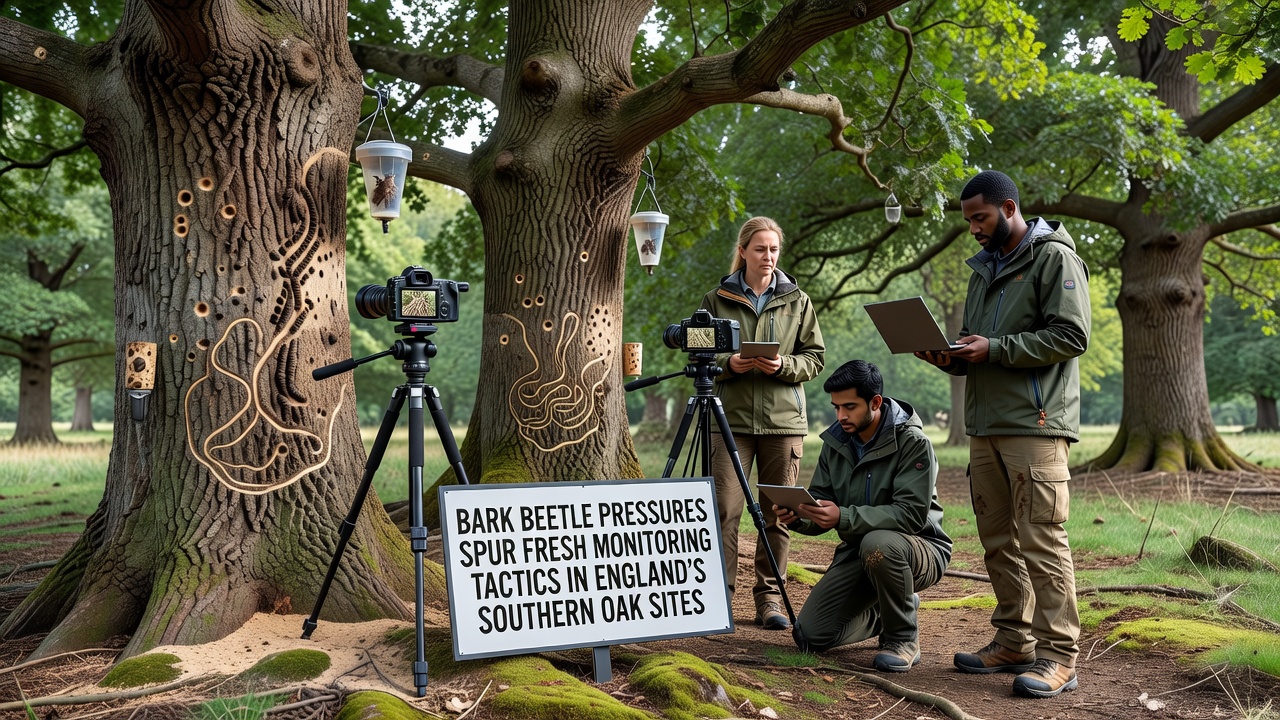
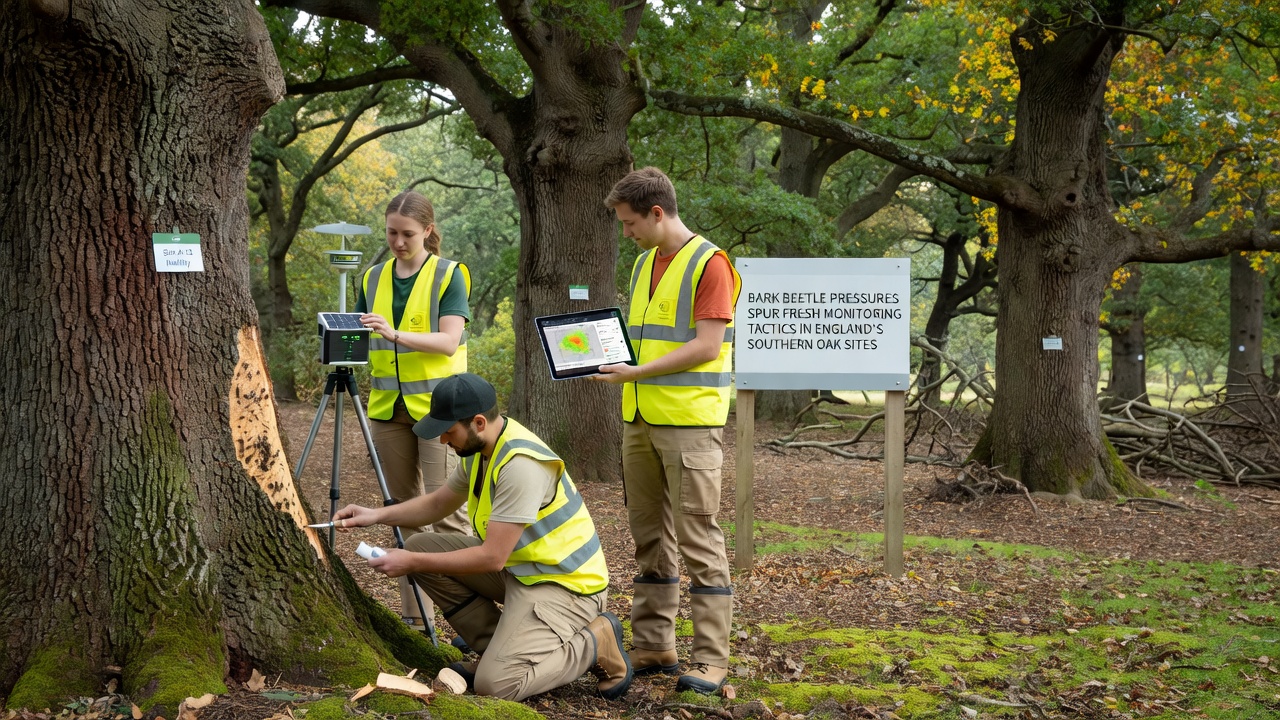
Forestry groups have shifted from seasonal visual inspections alone toward integrated systems that combine pheromone traps, drone-based canopy scans, and ground sensor networks. Trap placements now follow grid patterns calibrated to local topography while drones equipped with multispectral cameras capture early crown discoloration that often precedes visible beetle damage. Ground teams deploy acoustic sensors that detect larval movement within bark layers, allowing earlier intervention before full galleries form. These tools operate alongside traditional bark sampling yet reduce the time required to map spread across large sites. One study from a Canadian research institute documented how acoustic monitoring improved detection accuracy by 40 percent in comparable hardwood stands, and UK practitioners have adapted similar protocols for oak habitats.
Training programs for volunteers and professional staff now emphasize recognition of subtle symptoms such as sap staining and small exit holes that appear before major structural weakening occurs. Workshops held in 2025 and continuing into 2026 focus on data logging standards that feed into national databases managed by the Forestry Commission. This centralized approach enables rapid comparison of infestation trends across counties and supports decisions on selective felling or targeted insecticide applications where regulations permit.
Integration with Broader Forest Health Programs
Monitoring for bark beetles now runs in parallel with efforts to track other oak pathogens and climate impacts. Data sharing agreements between county councils and research institutions allow cross-referencing of beetle counts with leaf miner records and soil moisture readings. Such coordination helps identify sites where multiple stressors compound tree vulnerability. Figures from the UK Forest Research agency indicate that combined monitoring has already flagged several high-priority locations for intensified observation during the 2026-2027 winter period.
International collaboration adds another layer. A report issued by the European Food Safety Authority outlines standardized trap designs and reporting formats that several English counties have adopted. Meanwhile researchers at an Australian university studying similar beetle dynamics in eucalyptus plantations have shared remote sensing techniques that UK teams are testing on oak canopies. These exchanges demonstrate how local challenges draw on solutions developed across different forest types and regulatory environments.
Challenges in Implementation
Resource constraints remain a practical issue. Smaller woodland owners often lack access to drone technology or sensor arrays, creating uneven coverage across the landscape. Some sites rely on periodic visits by volunteer groups whose observations still require verification by trained entomologists. Weather variability further complicates scheduling because heavy rain can wash away frass evidence and limit trap effectiveness. Despite these hurdles, incremental expansion of monitoring networks continues with funding allocated through national forestry grants and local conservation partnerships.
Conclusion
England's southern oak sites continue to experience bark beetle pressures that have driven adoption of layered monitoring tactics combining traditional surveys with newer technological tools. Records from October 2026 and preceding seasons illustrate both the scale of activity and the response measures now in place. Ongoing data collection and cross-border knowledge exchange support efforts to maintain these woodlands while further refinements to detection methods remain under evaluation.